December 21 | Welcoming the Season of Yule
There is something magical about the Winter Solstice. As the shortest day draws to a close and the longest night settles over the land, I imagine the Earth and all her creatures quietly anticipating the turning of the year. The trees stand bare or evergreen against the winter sky, animals follow their own seasonal rhythms, and the natural world seems to invite us into a quieter way of being.
For me, the magic of Winter Solstice isn’t simply the promise that the Sun will return. It’s also the beauty of the darkness itself, the stillness of winter, and the awareness that we are part of something far greater than our everyday lives.
The Winter Solstice marks the moment when the Sun reaches its southernmost position in our sky. Here in the Northern Hemisphere, we experience the shortest period of daylight and the longest night of the year. From this turning point, the days gradually begin to lengthen, although the change is so subtle that we may not notice it for some time.
Even the word solstice, derived from Latin, suggests the Sun standing still. For a few days around the solstice, its movement along the horizon appears almost to pause before reversing direction. I love imagining that moment of stillness, as though nature herself is lingering at the threshold between one part of the cycle and the next.
The Solstice and the Old Ways
Long before calendars and clocks marked the passing of our days, people watched the movements of the Sun, Moon, and stars to understand the changing seasons. The Winter Solstice held particular significance in many ancient cultures, inspiring monuments, gatherings, and observances that continue to fascinate us today.
In Ireland, the remarkable passage tomb of Newgrange was built more than 5,000 years ago. Its entrance was carefully positioned so that, on mornings around the Winter Solstice, the rising Sun sends a narrow beam of light deep into the stone passage, illuminating the chamber within. Although we cannot know precisely what this meant to its builders, their extraordinary attention to the Sun’s movement speaks to the importance of this seasonal turning.
The Celtic relationship with the changing seasons is rich with tradition, although much of what we know comes from accounts recorded long after the ancient Druids themselves. Early Irish celebrations such as Samhain, Imbolc, Beltane, and Lughnasadh marked important seasonal transitions, while monuments such as Newgrange remind us that the turning of the Sun had been observed in Ireland for thousands of years before these traditions were recorded. The precise ceremonies of the ancient Druids at Winter Solstice remain largely unknown, leaving us with a fascinating mixture of history, archaeology, and mystery.
In contemporary Druid traditions, Winter Solstice is often celebrated as Alban Arthan, a name associated with the light of winter and the returning Sun. The celebration invites us to recognize the changing balance of darkness and daylight, to honor the stillness of the season, and to renew our connection with the natural world. Fire and candlelight may become symbols of the Sun’s return, while evergreens remind us that life continues even through the coldest months. These modern observances are not exact recreations of ancient ceremonies, but living expressions of a relationship with nature that continues to hold meaning today.
The northern European celebration of Yule also carries a long history of midwinter gatherings, feasting, and seasonal traditions. Although historical Yule celebrations did not necessarily begin on the astronomical solstice, the two have become closely connected in many celebrations today.
Across these different traditions, I find a shared appreciation for the rhythms of nature and our place within them.
Honoring the Darkness
We often speak of the Winter Solstice as the return of the light, and rightly so. Yet I wonder whether, in our eagerness to welcome longer days, we sometimes overlook the beauty of the longest night itself.
Winter darkness has its own gifts. There is the quiet of an evening sky, the warmth of a fire, the fragrance of evergreens, and the pleasure of simply being sheltered from the cold. There is something comforting about the slower rhythms of this season, even when our modern lives don’t always allow us to follow them.
The darkness is not something we need to overcome. It is part of the natural cycle, as essential as the light that follows. Without the long nights of winter, we might never experience quite the same wonder at the lengthening days of spring.
Perhaps that is what I love most about the Winter Solstice. We can stand at the turning of the year, fully embracing the darkness around us while knowing that the Sun has already begun its gradual return. There is no need to hurry either experience.
Ways to Celebrate the Longest Night
Winter Solstice doesn’t require an elaborate ceremony or a particular place to gather. Sometimes the simplest observances are the most meaningful.
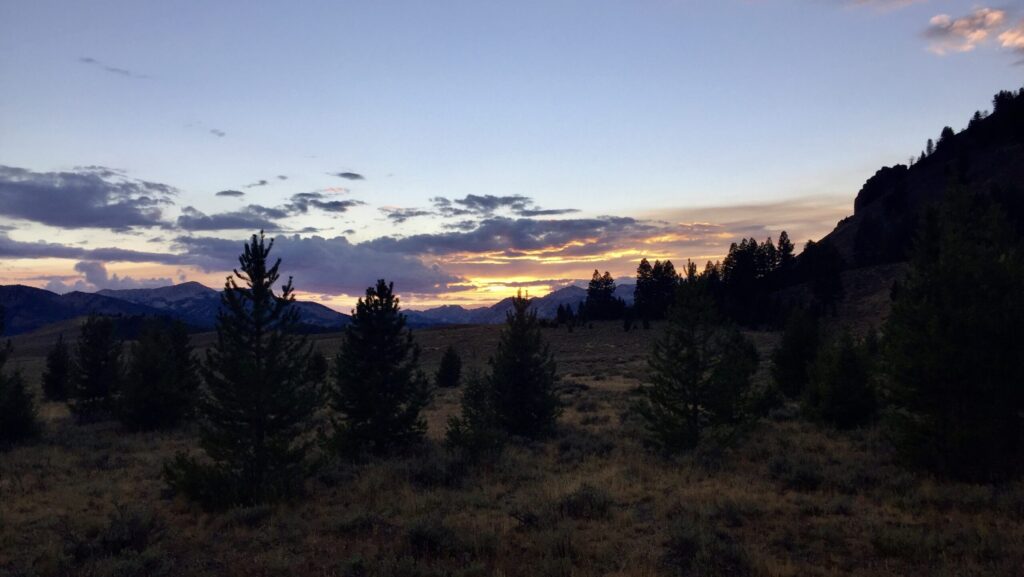
Consider watching the sunset on this shortest day, noticing the colors of the sky as the light slowly fades. If you’re able, spend a little time outdoors as evening settles around you. Listen to the sounds of winter, feel the coolness of the air, and enjoy the changing landscape.
Later, perhaps light a fire in your hearth or outdoors if conditions allow. A candle or even a flameless candle can be just as lovely. You might choose to sit for a few moments in the darkness before introducing that small light, acknowledging both the beauty of the longest night and the promise of the Sun’s return.
You can share this experience with someone you love or enjoy it entirely on your own. There is no right way to celebrate, only an invitation to notice and experience this remarkable turning of the year.
Something to Ponder
What do I love about the darkness of winter, and what am I looking forward to as the light returns?
As we welcome the season of Yule and the twelve days that follow, perhaps we can begin by giving ourselves permission to slow down and savor the world around us.
The longest night is not merely something to endure. It is something to experience, to honor, and perhaps even to celebrate.