Exploring the folklore of familiar spirits and the extraordinary relationships we share with the animals who find us.
There are animals who enter our lives and become beloved companions, bringing affection, laughter, comfort, and sometimes a fair amount of mischief. And then there are those whose presence seems to stir something deeper within us. We may feel an immediate recognition, an unusual sense of understanding, or a connection that seems to reach beyond the ordinary boundaries of our relationship with an animal.
Throughout history, people have wondered about such connections. Animals have appeared in folklore as guardians, messengers, companions, and beings associated with the unseen world. Among the most intriguing of these traditions is the familiar spirit, a figure whose meaning has changed considerably over the centuries.
The Familiar in History and Folklore
The idea of familiar spirits has a fascinating and sometimes troubling history, particularly in the folklore and magical traditions of Britain. Although familiars are most often associated with witches, their story reaches into a wider world of supernatural helpers, fairy encounters, household spirits, and the relationships people once believed were possible between humans and unseen beings.
In early modern Britain, particularly during the sixteenth and seventeenth centuries, familiar spirits were described as beings who could offer assistance, knowledge, or protection. They sometimes appeared in animal forms, including cats, dogs, toads, and birds, but could also be described as humanlike figures or other mysterious entities. These spirits were not necessarily understood as ordinary animals. Rather, they were believed to be supernatural beings capable of taking different forms and developing ongoing relationships with particular people.
There are intriguing connections between familiar spirits and the older folklore of fairies and household beings. Across Britain, stories told of brownies, hobs, and other spirits who might assist with household tasks, offer guidance, or become troublesome when offended. Some historians have explored how these beliefs may have influenced accounts of familiars, particularly those associated with cunning folk—people who practiced traditional forms of healing, divination, and folk magic. The boundaries between fairy, household spirit, magical helper, and familiar were not always clearly defined.
The history becomes darker during the witch trials. As religious and social fears surrounding witchcraft intensified, familiar spirits were increasingly portrayed as demonic beings who assisted witches in harmful magic. Accounts of familiars became part of accusations and interrogations, sometimes contributing to the persecution of people suspected of witchcraft. Because many surviving descriptions come from trial records and sensational pamphlets, historians must carefully consider how much reflects genuine folk belief and how much was shaped by the expectations and fears of the period.
What makes this history particularly interesting is that the familiar was not always understood in the same way. Depending on the place, time, and storyteller, such a being might be described as a fairy helper, a household spirit, a supernatural companion, or something far more sinister. The familiar of popular imagination, particularly the black cat accompanying a witch, represents only one part of a much larger and more complicated tradition.
Today, we can explore these accounts without needing to adopt every belief they contain. They offer a glimpse into how earlier generations understood relationships with the unseen world and the possibility that companionship, guidance, and protection might come from beings beyond ordinary human understanding.
The Familiar in Modern Spiritual Practice
In many contemporary spiritual practices, the familiar is understood quite differently. Rather than a spirit commanded to perform magical tasks, a familiar may be regarded as an animal companion with whom a person experiences an unusually deep intuitive or energetic relationship.
Some practitioners describe their familiars as guardians during meditation or ceremony. Others experience them as sensitive companions who seem particularly aware of changes in atmosphere, emotion, or intention. There are also those who feel an inexplicable sense of recognition, as though the relationship began long before their lives together.
These are personal spiritual interpretations rather than experiences that can be universally verified. Yet they raise interesting questions about the ways we understand our relationships with other living beings.
Perhaps what matters most is not whether an animal fits a particular definition, but the nature of the relationship itself.
A Familiar Presence
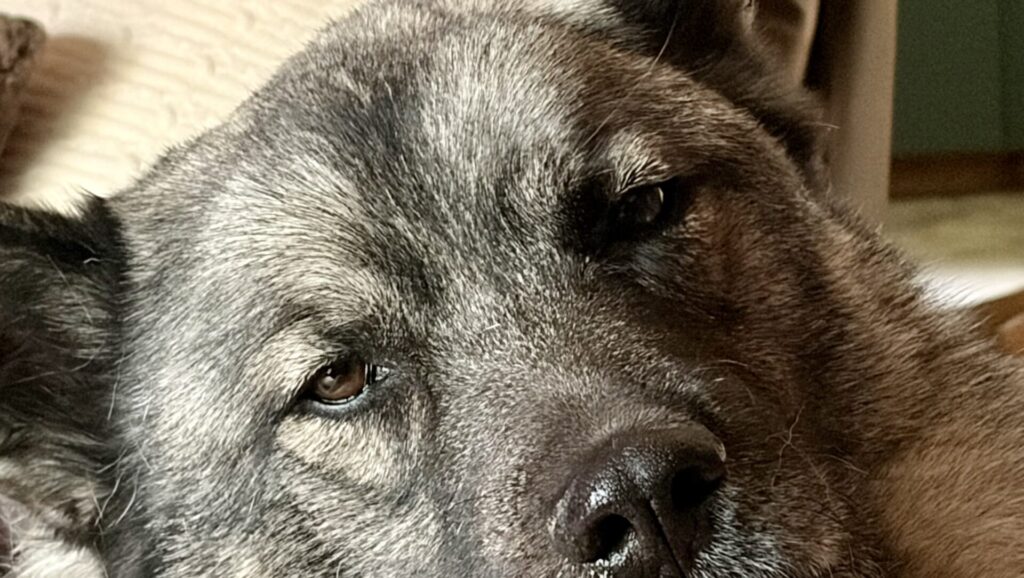
My own familiar is Ozzy, a dog whose presence in my life has always felt rather extraordinary. He is deeply sensitive, fiercely independent, and has a personality that requires understanding rather than expectation. Learning to work with him has meant paying attention to who he is and allowing our relationship to develop in its own way.
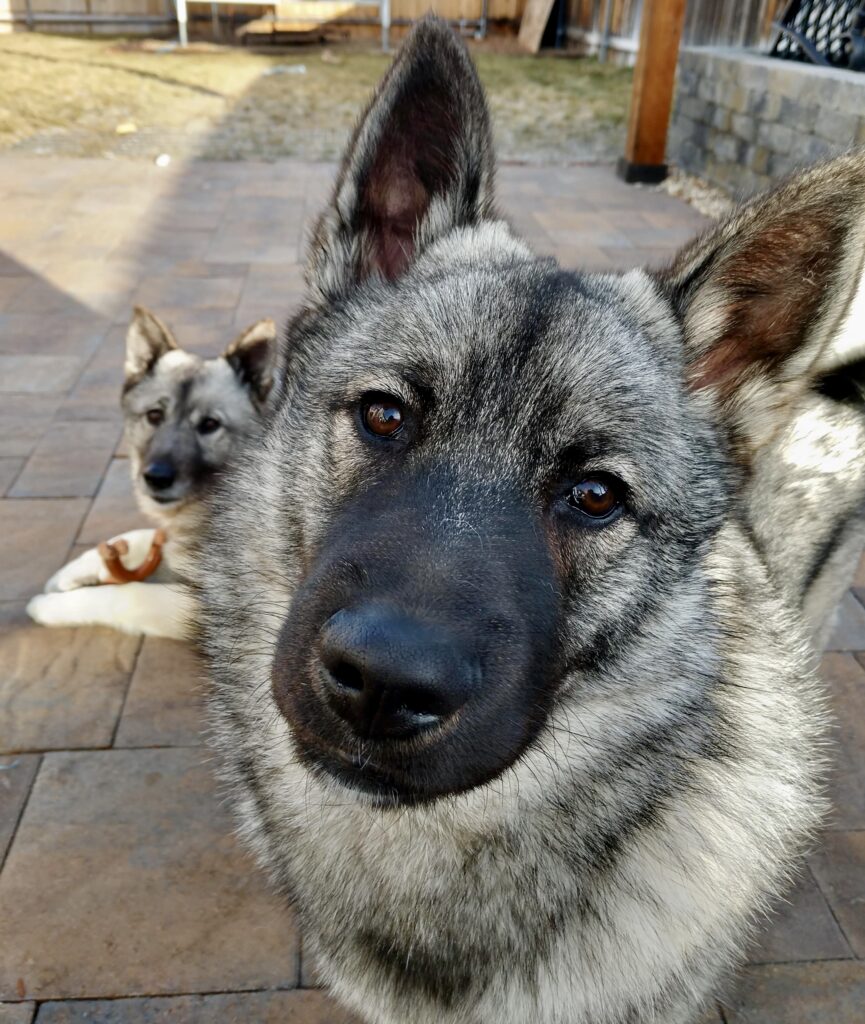
There are moments when he is entirely occupied with the ordinary pleasures of being a dog. Yet during ceremony, I often observe a remarkable change in his behavior. He may be running about as I prepare the space, but when I call in protection, he becomes still. Without being directed, he settles at the perimeter, watching intently and waiting patiently. When the ceremony is finished, he comes to rest at my feet.
I experience his presence in these moments as protective, calm, and grounding. There is also something about him that feels ancient to me, a quality of recognition that I cannot entirely explain. It is part of what makes our relationship so meaningful, even though much of it remains a mystery.
When Recognition Goes Beyond Words
Some connections with animals seem to awaken feelings or impressions that are difficult to put into language. A particular sound, a familiar expression, the way an animal watches the world, or an unexpected moment of stillness may stir something within us.
For some, these experiences carry a spiritual significance. They may evoke a sense of ancient memory, recognition, or a connection with the mysteries of the natural world. Others may understand them through the extraordinary sensitivity, intelligence, and individuality of animals.
Perhaps we need not insist upon one explanation for every experience. We can remain curious about what we feel while continuing to appreciate the animal before us for the remarkable being they already are.
The Animals Who Choose Us
I have often felt that the animals who become part of our lives choose us as much as we choose them. Sometimes the connection is immediate; at other times, it unfolds gradually through years of shared experiences, trust, and companionship.
Whether we call them familiars, kindred spirits, or simply beloved companions, animals invite us into relationships that are not entirely governed by human expectations. They have their own ways of communicating, their own preferences and boundaries, and their own responses to the world around them.
Perhaps there is an animal in your life whose presence has always felt a little different. One who seems particularly attuned to you, who behaves unexpectedly during quiet or meaningful moments, or whose companionship carries a sense of recognition you have never quite been able to explain.
What might you notice if you approached that relationship with fresh curiosity? Not to prove that your companion is something other than what they appear to be, but to discover more about the remarkable being who shares your life.
After all, some of the most meaningful relationships leave us with questions that are every bit as beautiful as their answers.
An Invitation to Explore Further
The history of familiar spirits offers a fascinating doorway into the folklore of Britain, the traditions of cunning folk, and the relationship between fairy beliefs and early modern witchcraft.
For readers interested in exploring these traditions more deeply, historian Emma Wilby’s Cunning Folk and Familiar Spirits: Shamanistic Visionary Traditions in Early Modern British Witchcraft and Magic (2005) examines historical accounts of familiar spirits, fairy encounters, and folk-magic practices. Her interpretations of the deeper origins of these traditions offer intriguing possibilities, although some remain debated among scholars.
English Heritage also offers an accessible introduction to historical witchcraft beliefs, including the role of familiar spirits.
Further reading:
- Emma Wilby, Cunning Folk and Familiar Spirits (2005).
- English Heritage, A Journey into Witchcraft Beliefs: https://www.english-heritage.org.uk/learn/histories/journey-into-witchcraft-beliefs/
These resources invite us to explore how the meaning of the familiar has changed across time, while leaving room for our own curiosity about the extraordinary relationships we share with animals today.