December 27 | Day Six of Yule
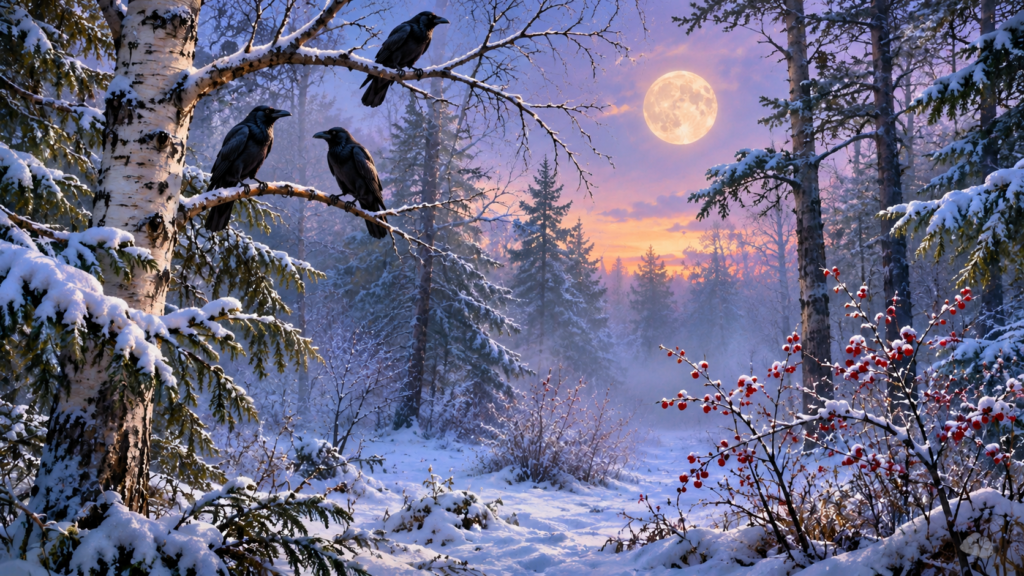
There is a particular stillness that can settle over the natural world in winter. In some places, trees stand bare or heavy with snow, while elsewhere the desert rests beneath a softer winter sun. The landscapes may differ, but across the Northern Hemisphere, the days grow shorter and darkness lingers longer into the morning. Nature seems to move at a different pace, inviting us to do the same. We may find ourselves drawn toward quieter evenings, longer periods of rest, and moments when there is simply nothing we need to accomplish.
And something rather wonderful can happen when we allow ourselves to slow down. We begin to notice what has been there all along. A thought that has quietly waited for our attention, a feeling we hadn’t quite understood, or that gentle inner knowing we sometimes call intuition. It isn’t necessarily that our intuition has suddenly become stronger. We may simply have become quiet enough to hear it.
Dreams, Omens & the Winter Mysteries
For centuries, people have looked to dreams, omens, and practices of divination when seeking insight into life’s uncertainties. These traditions have taken many forms across cultures and generations, from interpreting dreams to observing signs in the natural world or consulting objects used for divination.
In parts of northern European folklore, the dark days surrounding midwinter and the turning of the year became associated with unusual dreams, omens, and glimpses of what the future might hold. Customs varied greatly by place and period, and not every practice can be traced directly to ancient Yule celebrations. Yet the recurring human desire to seek wisdom during times of transition is a fascinating thread connecting many of these traditions.
The word omen itself is worth exploring. Today, it often brings to mind something frightening or a warning of misfortune, yet its meaning is much broader. Derived from the Latin omen, it refers to a sign believed to indicate something that may happen in the future, whether favorable or unfavorable. Interestingly, while ominous carries a sense of foreboding, an omen need not be threatening at all. Throughout history, people have recognized both good and bad omens, finding hope, reassurance, or caution in the signs they believed they encountered. Understanding this distinction allows us to approach the word with curiosity rather than fear, remembering that an omen is not, by its very nature, something to dread.
One fascinating example survives in Anglo-Saxon writings from the eleventh and twelfth centuries. Among these manuscripts are collections of predictions associated with the twelve nights of Christmas, including interpretations of the weather, dreams, and other natural occurrences. These writings offer a glimpse into how people once sought meaning in the world around them, particularly during the darker months of the year. Although these records come from medieval Christian society rather than directly documenting ancient Yule practices, they preserve a fascinating connection between winter, observation, and the desire to understand what might lie ahead.
There is something understandable about this curiosity. The darker months have long inspired people to wonder about what lies beyond the familiar, and the turning points of the seasonal year have often been associated with dreams, omens, and divination. Whether marking the beginning of winter at Samhain, the return of the light at the solstice, or the approach of a new calendar year, these moments offer opportunities to reflect upon what has passed and what may lie ahead.
The Wisdom of Listening
I find it interesting that we sometimes approach intuition as though it should provide an answer whenever we ask. Yet our inner wisdom doesn’t necessarily work that way. We can make time to listen, create space for reflection, and remain curious about what arises, but we cannot always determine when understanding will arrive.
Sometimes insight comes through a dream that lingers in our thoughts long after waking. At other times, something in nature catches our attention, or a quiet realization emerges while we’re occupied with an ordinary task. These experiences need not be extraordinary to be meaningful. Even a simple moment of noticing can invite us to consider something we hadn’t recognized before.
There is also freedom in allowing an experience to remain a mystery. Not every dream needs interpreting, and not every bird crossing our path is necessarily an omen. We can appreciate the beauty of an encounter without assigning it a particular meaning. When something does stir our curiosity, we can explore it with openness and discernment, allowing our understanding to unfold in its own time.
Making Room for Intuition
Winter offers a lovely opportunity to practice this kind of listening. With darkness surrounding us for more hours of the day, we may feel a natural invitation to rest, recover, and spend a little more time within ourselves. Rather than filling every quiet moment with activity, we might allow ourselves to enjoy the slower rhythm of the season.
For those drawn to divination, this may be a meaningful time to work with familiar tools, whether cards, runes, pendulum, scrying, sigils, or another personal practice. Such tools can offer a starting point for reflection, encouraging us to consider our questions from a different perspective. The value need not rest in predicting what will happen, but in the opportunity to explore what we are sensing, wondering, or beginning to understand.
And we need not practice divination at all to experience the wisdom of winter’s quiet. A walk among the trees, a few moments watching snowfall, or an evening spent remembering a dream can offer its own kind of discovery. The important thing is not to demand an answer, but to remain receptive to whatever the experience may bring.
Ways to Celebrate
On this sixth day of Yule, I invite you to spend a little time enjoying winter’s quieter rhythm. Step outdoors and notice the sounds of the season, or settle into a comfortable place where you can watch the changing light. Allow yourself a few moments without an agenda, appreciating the opportunity simply to be present.
If you remember a dream, consider writing it down without immediately trying to determine what it means. If you enjoy working with a divination tool, you might choose a symbol or rune and spend some time reflecting on the ideas it brings to mind. And if nothing particular arises, enjoy the stillness itself. There is no need to turn every quiet moment into a discovery.
Something to Ponder
What might I begin to notice if I allowed myself more moments of quiet? How might I make room for my intuition without expecting it to provide an answer?
As we celebrate this sixth day of Yule, may we welcome the longer hours of darkness as an invitation to rest, listen, and remain curious. Winter has its own quiet beauty, and sometimes the most meaningful discoveries come when we stop searching long enough to notice what is already around us.